

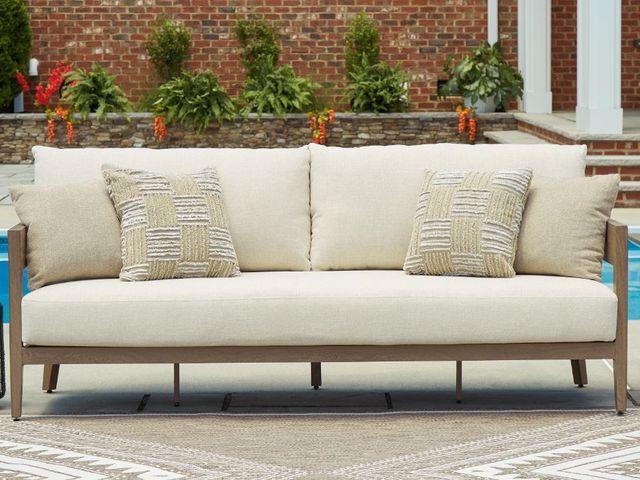
The chair has to be nudged left every time the storm door opens, and the scrape it leaves on the concrete has become a permanent gray arc. A delivery box sits wedged between the planter and the railing because there is nowhere else to set it. On one side of the door there is room for two seats or a clear path to the front step, never both, and whoever decided the planter belonged in the corner did not account for the hose bib behind it. Small porches are not short on style options. They are short on inches, and front porch furniture that ignores those inches ends up back in the garage by August.
Make Your Small Porch the Best Seat in the House
Our outdoor furniture team knows what survives a Las Vegas summer and a monsoon microburst, and what fits a 5-foot-deep covered entry. Shop outdoor loveseats, sofas, gliders and weather-ready cushions with local delivery and setup by our own crews.
The encouraging news is that small porches respond extremely well to good planning, and the fixes are measurable rather than mysterious. At Walker Furniture, our team has been helping Southern Nevada homeowners furnish patios, courtyards and covered entries since 1954, from Henderson townhome stoops to deep wraparound porches in the northwest valley. This guide covers how to measure a small porch honestly, which seating shapes actually fit, the frame materials that survive our sun, cushion fabrics that hold color, styling that adds presence without clutter, year-round practicality, and seven pieces of front porch furniture you can shop today.
Key Takeaways
- Clearance comes before comfort: Keep a walking path of about 36 inches from the steps to the door and leave the full door swing arc clear, including an outward-swinging storm door.
- Measure usable depth, not total depth: Railings, columns, downspouts, meter boxes and light fixtures all subtract from the footprint you can actually furnish.
- Material is decided by exposure: A fully covered porch opens up nearly every material, while an exposed one narrows the field to powder-coated aluminum, all-weather resin wicker and poly lumber.
- Solution-dyed fabric is the difference: Color built into the fiber rather than printed on the surface is why some outdoor cushions still look right after five summers.
Know Exactly What Will Fit Before Anything Is Delivered
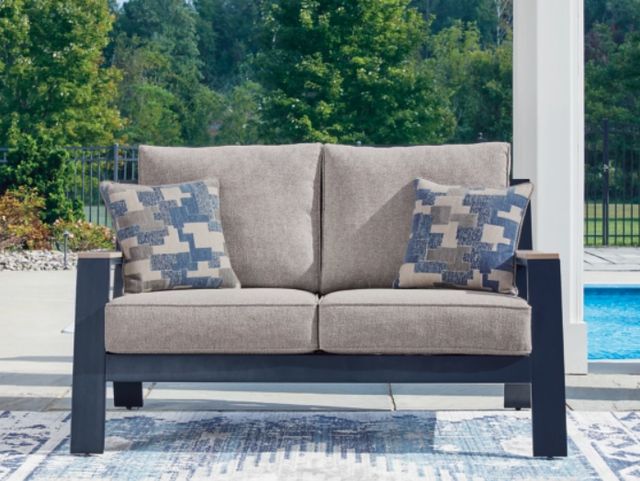
Two clearances are non-negotiable on a small porch. Keep a clear walking path of roughly 36 inches from the top step to the front door, and leave the entire door swing arc unobstructed. If you have a storm door that swings outward, measure that arc too, since it typically reaches further than the entry door and swings into the exact zone people want to put a chair.
Then measure usable depth rather than total depth. A porch listed as six feet deep on a floor plan is rarely six feet of furnishable space. Subtract for the railing and its cap, the column bases, the downspout, the electrical meter or hose bib, and the swing of the light fixture’s shadow if that fixture hangs low. What remains is your real number, and it is usually eight to fourteen inches smaller than the number on paper.
The Two Small Porch Shapes
Most small porches fall into one of two geometries, and each supports a different plan.
The narrow strip porch: Deeper than it is wide is rare; this one runs along the front of the house at four to five feet deep. It suits a bench, a slim console, or a pair of slim chairs in a row facing outward, all pushed toward the house wall.
- The shallow square landing: A compact square or rectangle at the door, often six by six feet or smaller. It suits a two-chair bistro arrangement angled toward each other, or a single seat with a small table.
Swings, Sightlines and the Tape Test
If a porch swing is on the list, budget for its motion. Allow roughly three feet of swing travel in front and three feet behind, plus side clearance from walls and railings so nobody clips a knuckle. Confirm the ceiling framing above can carry the load before anything is ordered, since a swing hangs from structure, not from drywall.
Sightlines matter as much as clearance. Seating should not block the view from the front window, the path from the driveway, or the top of the stairs, since a piece that interrupts the approach makes the whole entry feel closed.
Before you buy, mark the footprint with painter’s tape or cut cardboard rectangles at the exact dimensions and lay them down. Then run the door-swing test: open the entry door fully, then the storm door fully, and watch whether either one clips the tape. Ten minutes of this saves a return.
Fit Real Seating Without Losing Your Walkway
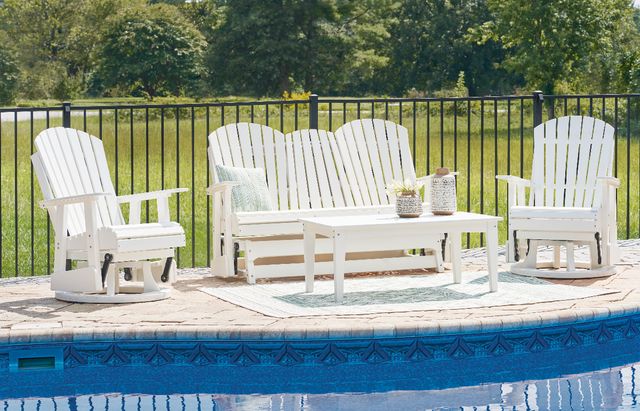
Small porches support more seating configurations than people expect, as long as the pieces are scaled correctly.
- A two-chair bistro arrangement with a tiny drink table between, angled slightly toward each other.
- A single bench against the house wall with a slim side table at one end.
- A pair of rocking chairs in a row on a narrow strip porch, both facing the street.
- A compact glider, which delivers motion in less floor space than a swing.
- A loveseat-scale settee, which seats two in roughly the width of one oversized chair.
- Backless stools that slide fully under a console or against a railing.
- A hanging or freestanding porch swing where the structure and clearance allow.
Read more:
How to Arrange Patio Furniture: 6 Inspiring Deck Furniture Ideas
Concrete Patio Ideas on a Budget
Scale Rules That Matter More Outdoors
Outdoor furniture is built heavier than indoor furniture, so scale mistakes are more punishing. Look for narrow arms or armless frames, since a wide rolled arm can add eight inches per side. Open-weave and slatted backs read light because you can see through them. Raised legs that show floor beneath the piece make a porch feel larger than a skirted base that meets the concrete. And seat depth should suit short visits, since a 24 inch deep lounge seat eats a small porch to hold a posture nobody uses for a ten-minute coffee.
Here is a distinction most guides skip entirely. Two pieces with identical measurements can make a porch feel completely different depending on frame openness and color. A dark, solid-sided wicker loveseat and a slim white aluminum loveseat can occupy the same 52 inches, but the first one blocks the view of the floor and railing behind it while the second lets the eye travel through. On a small porch, visual weight is a separate budget from footprint, and you have to spend both carefully.
Motion, Tables and Seasonal Storage
Rockers and gliders need behind-clearance. A rocking chair travels back roughly six to ten inches through its arc, so it cannot sit tight against a wall. A glider moves within its own frame, which is why it is the better motion choice on a tight porch.
Skip the coffee table on most small porches. A drink-height side table between two chairs does the same job in a third of the footprint, and a small stool doubles as both a surface and an extra seat when someone drops by.
Folding and stackable pieces earn their place on porches that get used seasonally or need to clear completely, whether that is for a repainting project, a holiday display, or simply for the peak of summer when nobody sits outside at all.
Choose Materials That Survive Sun, Rain and Real Seasons
Frame material determines how long front porch furniture looks new, and the right answer depends almost entirely on exposure.
- Teak: The premium hardwood. Naturally oily, resists rot and insects, and lasts decades. Left alone it silvers to gray; oiled once or twice a year it stays honey brown. Heaviest price tag on the list.
- Eucalyptus and acacia: Hardwoods at a friendlier price. They need annual sealing or oiling and do not tolerate constant standing moisture as well as teak.
- Powder-coated aluminum: Rustproof, light, and available in slim modern profiles. The finish can chip at the feet and needs touch-up, and the low weight is a liability on a windy porch.
- Steel and wrought iron: Heavy enough to stay put in any wind, and classic in appearance. Rust starts at welds and scratches, so touch-up paint is part of ownership.
All-weather resin wicker over an aluminum frame: Woven look with none of the fragility of natural rattan. Quality varies widely; cheap resin cracks under UV within a few seasons while good resin holds for a decade.
- Recycled HDPE poly lumber: Colored all the way through, immune to rot, and heavy enough to stay in place. It is the lowest-maintenance choice on the list and the least likely to look dated.
What Your Climate Actually Decides
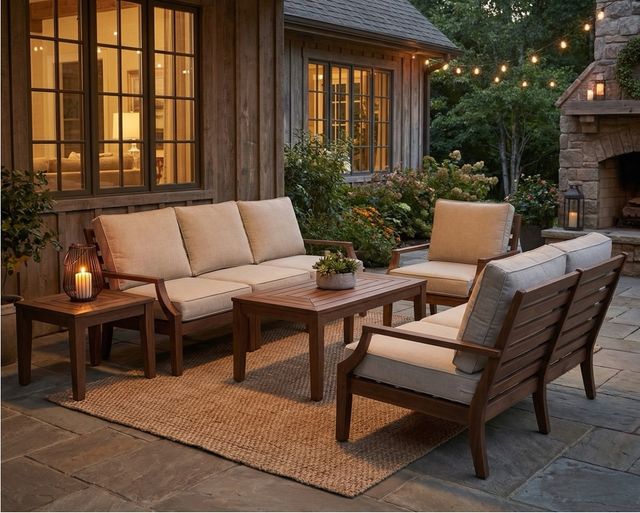
Five factors settle the material question: whether the porch is covered, how much direct sun it gets, humidity and mildew risk, freeze-thaw cycling, and wind lift on lightweight frames.
A fully covered porch broadens the field enormously, because rain never touches the furniture and UV arrives at an angle rather than straight down. A partially covered porch is the trap, since driving rain still reaches the outer half and reflected UV off concrete and stucco hits the underside of everything. Treat a partially covered porch as exposed when you choose materials.
Finish care is honest work. Teak either gets oiled or gets gray, and both are legitimate choices. Powder coat chips and wants a touch-up pen kept in a drawer. Steel and iron rust at welds first, so that is where to look each spring.
Weight is a feature, not a spec. A light aluminum chair is easy to move for sweeping and easy to lift onto a truck, but it is also easy for a gust to move for you. Poly lumber and iron stay where you put them.
Here is the maintenance-minutes math our outdoor team uses to help shoppers weigh upfront price against ongoing effort:
- Poly lumber: about 20 minutes a year, mostly a hose rinse.
- Powder-coated aluminum: about 30 minutes a year, plus occasional touch-up.
- All-weather resin wicker: about 45 minutes a year for rinsing and brushing the weave.
- Steel or wrought iron: about 60 minutes a year, including rust inspection and spot painting.
- Eucalyptus or acacia: about 90 minutes a year for cleaning and resealing.
- Teak: about 20 minutes if you let it gray, or 2 hours a year if you oil it.
Add Comfort That Does Not Fade, Mildew or Soak Through
Cushion fabric follows a clear hierarchy, and knowing it prevents the most expensive outdoor furniture mistake.
- Solution-dyed acrylic: The fade-resistant premium standard. Holds color for many years under direct sun and cleans easily. Costs the most.
- Solution-dyed olefin: The strong value option. Nearly as fade resistant, slightly less soft, and considerably less expensive.
- Polyester: The budget option. Comfortable and inexpensive, with the shortest color life, especially under intense direct sun.
Solution-dyed means the color is added to the liquid fiber before it is spun, so the pigment runs all the way through each strand like a carrot rather than sitting on the surface like a radish. That is the entire reason some outdoor fabrics still look right after five summers while others go chalky in one.
Cores, Drainage and Small-Footprint Comfort
The foam inside matters as much as the fabric outside. Quick-dry reticulated foam has an open cell structure that lets water fall straight through instead of holding it. Mesh-wrapped cores do the same job by keeping the foam from packing against the fabric. A cushion that holds water is how mildew, odor and that unpleasant squish on a Saturday morning all start.
Comfort accessories add a lot without taking floor space:
- Outdoor throw pillows in a solution-dyed fabric, two at most on a small loveseat.
- A slim lumbar pillow, which makes a shallow-seat chair far more comfortable.
- A compact outdoor rug sized to the seating group rather than to the whole porch.
- A lightweight throw for the cool desert evenings that arrive fast after sunset.
Care is straightforward: rinse cushions with a hose when they get dusty, spot clean with mild soap and let them dry fully before storing, and use a furniture cover on an exposed porch during the harshest weeks.
The rug rule for small porches is the one that surprises people. An oversized rug that runs wall to wall shrinks the space visually by erasing the floor as a background. A rug sized so the front legs of the seating sit on it, with bare porch floor visible around all four sides, anchors the seating and makes the porch read larger.
Make a Small Porch Look Designed, Not Crowded
Layer a small porch in five moves and then stop: one seating anchor, one surface, one lighting element, one greenery element, and one textile. Adding a sixth is where porches start to look crowded rather than styled.
Going vertical is how a small porch gets personality without losing floor space:
- Wall-mounted planters on the house wall beside the door.
- Hanging baskets from the porch ceiling or a bracket.
- A railing planter box that clips over the top rail.
- A slim plant stand tucked against a column.
- A wall-mounted drop-leaf shelf that folds flat when it is not holding a drink.
Lighting works the same way. Sconces flanking the door, solar string lights along the railing, lanterns on the step edges and a ceiling fixture all add evening warmth without occupying a single square foot.
Color strategy is simpler than it looks. Use the front door color as the palette anchor and repeat it once or twice, in a cushion, a doormat or a planter. Two repeats make a small porch read coordinated; four make it read busy.
Seasonal decorating should swap rather than accumulate. One wreath comes down when the next goes up, and the container of decor never gets a second box. Style directions worth committing to include classic Southern with rockers and ferns, modern minimal with clean aluminum lines and a monochrome palette, cottage with painted wood and floral cushions, and coastal with woven texture and pale finishes.
The clutter rule that keeps a small porch curated: anything that has not been used, watered or sat in within the past month leaves the porch. That includes the dead mum, the second doormat and the folding chair that came out for one party in April.
Keep Your Porch Functional Through Every Season
Dual-purpose pieces solve small-porch problems better than any single-purpose one. A storage bench holds cushions, shoes and a folded throw under the seat people sit on. A narrow deck box sized to the porch depth swallows off-season cushions without blocking the path. A bench with an open lower shelf gives boots and baskets a home that is not the doorway.
Delivery reality deserves a plan. Keep a clear landing zone near the door for packages, and choose pieces that do not become a permanent parcel shelf, since a bench that collects boxes stops being a place to sit within a month.
Securing furniture matters more on exposed porches than most people believe. Weighted bases, sandbag-style furniture weights tucked inside hollow frames, and simple anchor straps on the lightest pieces all keep a chair from taking a walk in a gust.
Off-season care by material is straightforward: cushions come inside and go into storage dry, covers go over the pieces that stay out, aluminum and poly lumber can stay put year-round, and wood benefits from a covered spot or a garage stint when the weather turns hardest.
A small porch still has to work as an entry. Reserve room for a doormat, a spot to lean an umbrella, and a place to set wet or muddy shoes. If furnishing the porch eliminates those, the furniture is too big.
Spring and Fall Checklist
- Wash the frames with mild soap and rinse, paying attention to the underside where grit collects.
- Tighten every bolt and screw, since seasonal expansion loosens hardware.
- Inspect cushion seams and zippers for UV damage and re-stitch what is starting to go.
- Check welds and feet for rust or chipped powder coat and touch up what you find.
- Rotate cushions end to end so sun exposure evens out across the surface.
- Test that the door still swings fully clear now that the furniture has shifted over a season.
Front Porch Furniture Materials Compared
| Material | Weather resistance | Weight and wind stability | Maintenance | Price tier | Main limitation |
|---|---|---|---|---|---|
| Teak | Excellent, decades of life | Moderate to heavy, stays put | Low if left gray, higher if oiled | Premium | Highest upfront cost |
| Eucalyptus or acacia | Good with regular sealing | Moderate, generally stable | Annual cleaning and resealing | Mid | Needs yearly attention |
| Powder-coated aluminum | Excellent, will not rust | Light, can move in strong gusts | Low, occasional touch-up | Mid | Finish chips at the feet |
| Wrought iron or steel | Good, rust starts at welds | Heaviest, never moves | Moderate, spot painting | Mid to premium | Heavy to move for cleaning |
| All-weather resin wicker | Very good on quality weave | Light to moderate frame | Rinse and brush the weave | Mid | Low-grade resin cracks in UV |
| Recycled poly lumber | Excellent, color runs through | Heavy, wind stable | Lowest, hose rinse only | Mid to premium | Fewer slim modern profiles |
For the lowest maintenance choose poly lumber, for the friendliest budget choose eucalyptus or acacia, for an exposed windy porch choose iron or poly lumber, and for classic curb appeal choose teak or a painted wood rocker.
Furnishing a small front porch adds usable living space to a home at a lower cost per square foot than almost any interior project, and it changes the first thing anyone sees when they arrive. The honest costs are seasonal upkeep and a very tight margin for error on clearance.
Pros
Real living space you were not using
A porch turns into a morning coffee spot and an evening sitting area, which is square footage the house already had and was wasting.
Curb appeal and first impressions
Furnished entries reads as cared for from the street, which matters for how the home feels every time you pull into the driveway.
A place to be part of the neighborhood
Seating at the front of the house is where conversations with neighbors happen, in a way a backyard patio never produces.
The cheapest square footage in the house
Outfitting a porch costs a fraction of adding an interior room and delivers usable space in a single delivery.
Cons
Seasonal upkeep and storage demands
Cushions need somewhere dry to live off-season, frames need washing, and hardware needs tightening on a schedule.
No margin for a sizing mistake
On a small porch, a piece two inches too deep blocks the door swing or the walkway, so measurements have to be right the first time.
What the Mojave Does to Front Porch Furniture
Las Vegas is one of the hardest outdoor furniture climates in the country, and it is hard in an unusual way. We get roughly 300 sunny days and very little rain, so the enemy here is not rot or mildew, it is ultraviolet radiation and heat. Summer surface temperatures on a south or west-facing concrete porch routinely exceed what a bare hand can hold, which cooks unprotected cushion foam and makes cheap resin brittle. Then monsoon season arrives in July and August with microbursts that push 60-mile-an-hour gusts through the valley for ten minutes at a time, and every lightweight chair on an exposed porch becomes a projectile. Add master-planned community rules across Summerlin, Anthem, Aliante and Inspirada that govern what can be visible from the street, and valley porch furniture has to clear a bar that Midwest guides never mention.
- Choose solution-dyed acrylic or olefin cushions here, since standard polyester fades visibly in a single valley summer.
- Weight or anchor anything on an uncovered porch before monsoon season starts in early July.
- Prefer light frame colors on uncovered porches, because dark aluminum and dark poly lumber get genuinely too hot to touch by mid-afternoon.
- Confirm your HOA’s rules on visible front-yard and porch furnishings before ordering, since some valley communities restrict color and style at the street-facing entry.
- Store cushions indoors during July and August rather than in a deck box on the porch, since box interiors here reach temperatures that break down foam.
- Position seating on the shaded side of the entry, since even a covered porch bakes on the west-facing half after four in the afternoon.
Here is the maintenance detail our outdoor furniture team gives every valley customer: after a dust event, rinse the frames and cushions with a hose before anyone sits down. The fine caliche dust that settles here is abrasive, and sitting on it grinds it into powder coat and into fabric fibers, which is what turns a two-year-old cushion dull well before its color has actually faded.
Our Best Front Porch Furniture Picks at Walker Furniture
These seven pieces cover the configurations that actually work on small porches: loveseat-scale seating for two, full sofas for a deeper covered entry, and a glider for anyone who wants motion without the clearance a swing demands. Match the frame material to your exposure using the sections above, then choose by footprint. All of them can be sat in, measured and compared in our Las Vegas showroom before delivery.
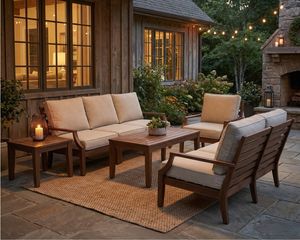
Kangaroo Outdoor Loveseat with Cushion
Shop Kangaroo Outdoor Loveseat
Category: Outdoor Furniture Sets
Loveseat scale is the sweet spot for a small porch, because it seats two people in roughly the width of one oversized lounge chair and leaves the walking path intact. This one arrives with its cushion included, which removes the guesswork of sourcing a cushion that actually fits the frame later. Set it against the house wall on a narrow strip porch and it reads as intentional seating rather than as leftover patio furniture pushed to the front. It suits couples, small households and anyone whose porch has room for exactly one piece.
Top Features
- Loveseat proportions: Seats two in about the width of one oversized chair, which is the most efficient seating on a tight porch.
- Cushion included: The seating surface is matched to the frame out of the box, so there is no aftermarket cushion hunt.
- Wall-friendly placement: Works pushed against the house wall, which preserves the 36 inch walking path to the door.
- Single-piece solution: Furnishes a small porch in one purchase rather than assembling a set from parts.
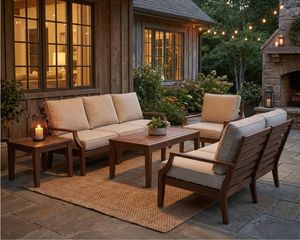
Kangaroo Outdoor Sofa with Cushion
Shop Kangaroo Outdoor Sofa with Cushion
Category: Outdoor Seating
When the porch is deep enough or wraps around a corner, stepping up from a loveseat to a full sofa changes how the space gets used. Three seats mean the porch hosts conversation rather than just a pause before going inside. This sofa comes with its cushion, matched to the frame, and it belongs on a covered entry where the seating can stay in place year-round. Measure your usable depth first using the railing-and-column method from earlier, since a sofa is the piece most likely to overrun a footprint that looked adequate on paper.
Top Features
- Three-seat capacity: Turns a covered entry into a place where people actually gather instead of pass through.
- Matched cushion included: Frame and seating are sized to each other, which avoids a sagging aftermarket fit.
- Covered porch fit: Best suited to a porch with real overhead protection where the piece can stay out year-round.
- Anchor piece for a layout: Serves as the single seating anchor in the five-element styling approach, with room left for a table and a plant.
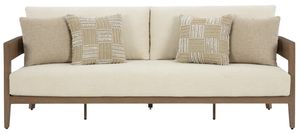
Earthline Dark Brown/White Aluminum/Fabric Outdoor Sofa
Category: Outdoor Seating
An aluminum frame is the practical answer in the desert, because aluminum does not rust, does not swell in dry air and stays light enough to reposition for sweeping. The dark brown and white two-tone reads modern without going stark, so it holds up in a community where the front entry is visible from the street. Aluminum’s one weakness is exactly the one our monsoon season exploits, so weight the frame or anchor it if this sofa lives on an uncovered porch. On a covered entry, it is close to a set-and-forget piece.
Top Features
- Aluminum frame: Rustproof and dimensionally stable in dry desert air, which removes the most common outdoor failure point.
- Two-tone dark brown and white: Modern styling that still reads warm, suitable for a street-facing entry in a managed community.
- Light enough to reposition: Easy to move for cleaning or for a repainting project, unlike iron or poly lumber.
- Weight it for wind: The one trade-off of aluminum, easily solved with frame weights before monsoon season.
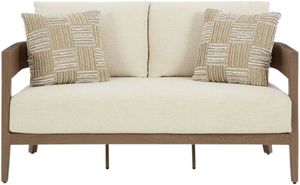
Earthline Dark Brown/White Aluminum/Nuvella Outdoor Loveseat
Shop Earthline Outdoor Loveseat
Category: Outdoor Furniture Sets
This is the fabric-first pick in the group. Nuvella is a solution-dyed performance fabric, which means the color runs through each fiber rather than sitting on the surface, and that is the single most important trait for a cushion facing 300 days of Nevada sun. Pair that with a rustproof aluminum frame and loveseat proportions that fit a narrow porch, and you have a piece built for exactly the conditions described earlier in this guide. It suits an entry that gets real afternoon exposure and needs to still look right in year five.
Top Features
- Nuvella solution-dyed fabric: Color built into the fiber, which is what resists the fading that ruins standard polyester cushions here.
- Aluminum frame: No rust, no swelling and easy repositioning, matched to the same collection as the sofa.
- Loveseat footprint: Fits a narrow strip porch where a full sofa would consume the walking path.
- Easy cleaning: Performance fabric rinses and spot cleans, which matters after a valley dust event.
Tides Outdoor Loveseat
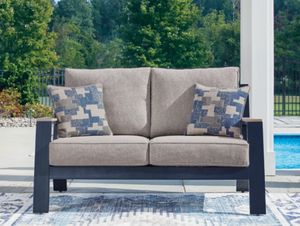
Category: Outdoor Furniture Sets
Coastal styling works better in the desert than people expect, because pale finishes and woven or open textures reflect heat and read cool in a bright, high-contrast environment. This loveseat leans that direction, which makes it a strong choice for a porch that gets a lot of light and needs to feel like a break from it. Two-seat scale keeps the door swing and the walkway clear on a small entry. Add one lumbar pillow and a compact rug under the front legs, and the porch is styled in three moves.
Top Features
- Light coastal styling: Pale, open-feeling design that reflects heat and reads cooler on a bright entry.
- Two-seat scale: Sized so the walking path and door swing stay clear on a compact porch.
- Pairs easily with texture: Works with woven planters, natural fiber rugs and simple lantern lighting.
- Easy to style minimally: One pillow and a small rug finish the look, which suits the five-element approach.
Tides Outdoor Sofa
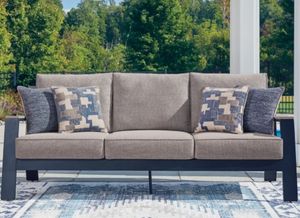
Category: Outdoor Seating
The full sofa version of the same design is the pick for a deeper covered porch, a courtyard entry or a shaded front patio where three seats are genuinely usable. Light, coastal-leaning finishes do useful work in a small space, since a pale frame recedes visually while a dark one advances and makes the porch feel tighter. That visual weight distinction from earlier in this guide is exactly what this piece takes advantage of. Confirm your usable depth before ordering, and our team will check the fit against your measurements.
Top Features
- Three-seat sofa: The right capacity for a deeper covered porch or a shaded courtyard entry.
- Pale finish reduces visual weight: A light frame recedes so the porch feels larger than the footprint suggests.
- Coordinates with the matching loveseat: Lets a wraparound porch use two pieces from one design family.
- Comfortable for real sitting: Sized for conversation and morning coffee rather than for a quick perch.
Breeze Outdoor Glider Loveseat
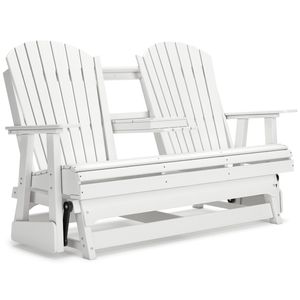
Shop Breeze Outdoor Glider Loveseat
Category: Outdoor Furniture Sets
Motion is the thing people miss most on a small porch, and a glider is how you get it without the three feet of front and rear clearance a hanging swing demands. A glider moves within its own frame footprint, so it can sit closer to a wall than a rocking chair and needs no ceiling structure at all. Two-seat width means it works on a narrow strip porch where a swing would never fit. For a household that wants the classic front porch experience in a compact entry, this is the most direct answer in the lineup.
Top Features
- Gliding motion in a fixed footprint: Moves within its own frame, so it needs far less clearance than a rocker or a hanging swing.
- No ceiling structure required: Freestanding, which removes the joist-support question entirely.
- Two-seat loveseat width: Fits a narrow porch while still seating two people comfortably.
- Classic porch feel in a compact size: Delivers the front porch experience on an entry that cannot host a swing.
Turn a Small Porch Into Big Style With the Right Front Porch Furniture
Measure the walkway and the door swing before anything else, choose seating scaled to the real usable footprint rather than the one on the floor plan, and let your exposure and our climate decide the frame material and the cushion fabric. Get those three right and a five-foot-deep entry can be the most-used seat in the house.
Come sit in them. Shop front porch furniture online at Walker Furniture or visit our Las Vegas showroom, where our outdoor specialists will talk through your porch dimensions, your exposure and your community’s rules, and let you feel the difference between a solution-dyed cushion and a printed one before you spend a dollar. Our own crews handle delivery and assembly, and our service team is here in the valley long after the sale, which is not something a warehouse shipment and a call center can match.
Frequently Asked Questions about Front Porch Furniture
A small front porch typically fits a loveseat or bench against the house wall, a pair of slim chairs in a row, or a two-chair bistro arrangement with a drink-height table between them. The deciding number is usable depth after railings, columns and downspouts are subtracted, and whatever you choose has to leave about 36 inches of walking path to the door.
Keep roughly 36 inches of clear walking path from the top step to the front door, and leave the entire door swing arc unobstructed, including an outward-swinging storm door. Rocking chairs need an additional six to ten inches behind them for their arc, and a hanging swing needs about three feet of travel in front and behind.
Recycled poly lumber and powder-coated aluminum are the strongest all-weather choices, since neither rots nor rusts and both shrug off sun and rain with minimal upkeep. Poly lumber is the better pick on an exposed or windy porch because of its weight, while aluminum wins where the piece needs to be light enough to move.
Cushions should come indoors and be stored dry regardless of climate, since trapped moisture is what causes mildew and odor. Aluminum, poly lumber and all-weather resin wicker frames can stay outside year-round in most conditions, while hardwood frames last longer under a cover or in a garage through the harshest stretch of the year.
On a small porch, choose a rug sized so the front legs of the seating sit on it while bare porch floor remains visible on all four sides. A wall-to-wall rug erases the floor as a visual background and makes the space read smaller, which is the opposite of what most people expect.
A porch swing needs roughly three feet of clear travel in front and three feet behind, plus side clearance from railings and walls, and it requires confirmed ceiling joist support before installation. A rocking chair needs only six to ten inches behind it for its arc, and a glider needs even less because it moves within its own frame.
Why Trust Walker Furniture & Mattress?
The trust behind Walker Furniture & Mattress is built on a century-long legacy of craftsmanship and family values. It began in the early 1900s with Isadore Alterwitz’s mattress business in Chicago and evolved into a Nevada institution when the Alterwitz family purchased Walker Furniture in 1973. Today, as a locally owned and family-operated business, the Alterwitz family continues to serve the Las Vegas Valley with four convenient locations, offering a personal touch that national chains simply can't match.
Shopping at Walker means more than just buying furniture; it’s about investing in quality backed by a history of community dedication. Customers rely on their expertise for everything from flexible financing options, including long-term no-interest plans. With professional services like delivery tracking and comprehensive furniture protection, Walker Furniture & Mattress remains the region's most reliable choice for creating a beautiful, comfortable home.