

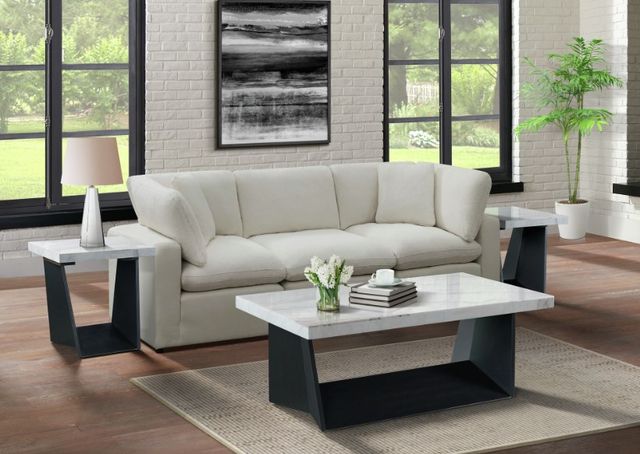
The mug goes on the sofa arm because there is nowhere else to put it, and it stays there through half a movie until someone shifts a cushion and a ring of coffee soaks into the upholstery. Four feet away, a floor lamp leans over the seat with its cord stretched across the path to the hallway. The side table that was supposed to fix all of this sits four inches too low, so reaching down for a phone means leaning out of the seat every time. None of that is a decorating problem. It is a sizing problem, and it is the reason end tables for living room seating get replaced so often.
Find the End Table That Finally Fits Your Living Room
Our design team helps Las Vegas and Henderson households size accent tables to real sofas, real walkways and real lamp placement every day of the week. Shop end tables, coffee tables and complete living room furniture with local delivery and setup handled by our own crews.
Here is the encouraging part: every one of those complaints traces back to about three measurements, and once you have them, shopping gets much simpler. At Walker Furniture, our team has been helping Southern Nevada families furnish living rooms since 1954, from downtown apartments to Summerlin great rooms with 20-foot ceilings, so we know which tables actually work beside which seating. This guide covers what an end table is really for, how to size one to your sofa arm, the design styles worth knowing by name, the shapes and materials that survive daily life, storage and charging features that earn their price, how to style a table without cluttering it, and seven tables you can shop today.
Key Takeaways
- Sofa arm height rules everything: A tabletop should land within about two inches of your sofa arm, level or slightly below, which puts most end tables in the 22 to 30 inch range.
- Depth matters as much as height: A table roughly 16 to 26 inches wide and deep keeps 30 to 36 inches of walking clearance intact around the seating group.
- Style is a conversation, not a match: Your end table should talk to the sofa through finish tone, leg shape or metal color rather than copying the coffee table exactly.
- Function settles the final pick: Drawers, shelves, closed cabinets and built-in USB-C charging separate a decorative accent table from a working surface you use every night.
Why the Right End Table Changes How Your Living Room Functions
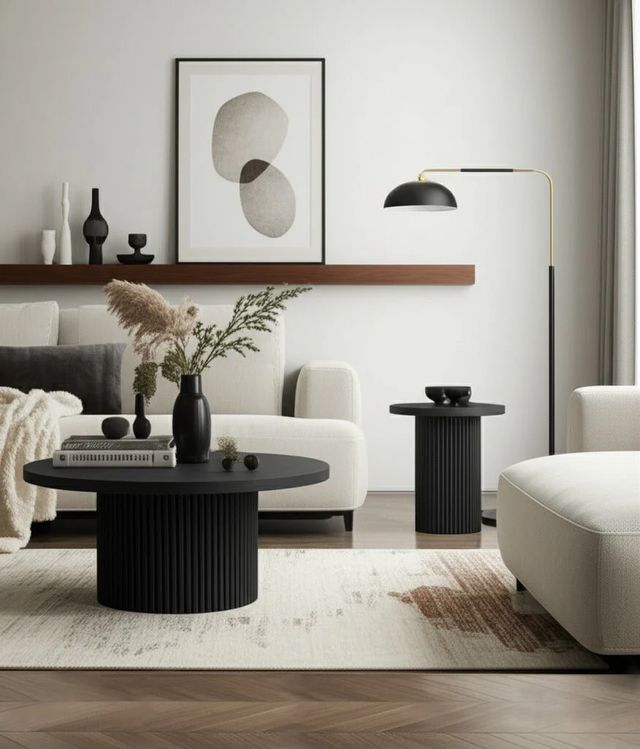
An end table has a job description, and it is longer than most shoppers realize. It carries the lamp that lights a reading seat. It holds the drink, the remote, the reading glasses and the phone. It anchors the visual end of a seating run so a sofa does not float in the middle of the room, and it marks where the traffic path begins.
The vocabulary you will meet while shopping is worth sorting out early, because stores use these terms loosely:
- End table: a working surface placed at the end of a sofa or beside a chair, sized to the arm.
- Side table: often used interchangeably, but usually a smaller or more decorative piece that can live anywhere along a wall.
- Accent table: primarily decorative, chosen for shape and finish rather than for holding a lamp and a drink.
- C-table: a table whose base slides under the sofa so the top hovers over your lap, built for laptops and snacks.
- Chairside table: a narrow table with a tray top or magazine slot, sized to fit tight against a recliner.
Where End Tables Actually Belong
Placement follows the seat, not the corner. The most useful spots are flanking a sofa on both sides, between two accent chairs as a shared surface, beside a recliner where the arm has no flat area, at the outside corner of a sectional where the chaise ends, and next to a chaise or daybed.
Use a simple planning rule before you shop: one working surface per seat. Count the places people actually sit and read, then count the surfaces within arm’s reach of those seats. If a seat has no surface, that is where a table belongs.
When One Table Beats a Matched Pair
A pair reads formal and symmetrical, which suits a sofa centered on a wall under artwork. A single table reads relaxed and modern, and it is the better call when one end of the sofa meets a wall or a walkway, when the room is under about 12 feet wide, or when a floor lamp already occupies one end. Buying two tables for a room that only needs one is the most common way to lose floor space you cannot spare.
Size Your End Table Once and Never Regret the Purchase
Most end tables stand between 22 and 30 inches tall, and the right one for your room is the one whose top sits within two inches of your sofa arm height, level or slightly below, never noticeably above. That single sentence answers the question most shoppers are actually asking.
Measuring the arm takes ten seconds. Hold a tape measure vertically against the outside of the sofa arm, from the floor to the highest flat point of the arm, and write down the number. If your sofa is armless or has a very low modern arm, use the seat cushion height instead and aim for a tabletop two to four inches above it, so the surface is reachable without being a shelf you bump.
Read more:
4 Sofa Sets for Every Living Room Style
Black Recliner Styles for a Modern Living Room
Width, Depth and Clearance
End table width and depth typically run 16 to 26 inches. Depth should stay at or under the depth of your sofa so the table does not push into the walking path. A 30 inch deep sofa can sit next to a 22 inch deep table comfortably; the same table beside a shallow 26 inch apartment sofa will stick out and catch shins.
- Leave two to three inches between the sofa and the table so cushions can shift and the vacuum fits.
- Keep 30 to 36 inches of walking clearance around the outside of the seating group.
- Allow at least 14 to 18 inches between a coffee table and the sofa front.
- For a reclining sofa or recliner, check the wall-hugger travel path first and place the table clear of the footrest arc.
The Measuring Checklist and the Two Classic Mistakes
Before you shop, collect four numbers: sofa arm height, sofa depth, the distance from the sofa end to the nearest wall or walkway, and the distance to the nearest outlet. That last one decides whether a lamp cord runs behind the table or across a path.
Here is the habit our sales team teaches every shopper who walks the floor: take a photo of the tape measure held against your sofa arm with the number readable, then save it to your phone. A written note gets lost, but a photo shows the arm shape too, which matters for deciding whether a table can tuck close or has to sit back from a rolled arm.
Two mistakes cause most returns. The first is buying a table to fill an empty corner instead of to serve a seat, which produces a surface nobody can reach. The second is matching table height to the coffee table rather than to the sofa arm, which is how a 19 inch table ends up beside a 26 inch arm.
Match Your End Table to the Look You Already Love
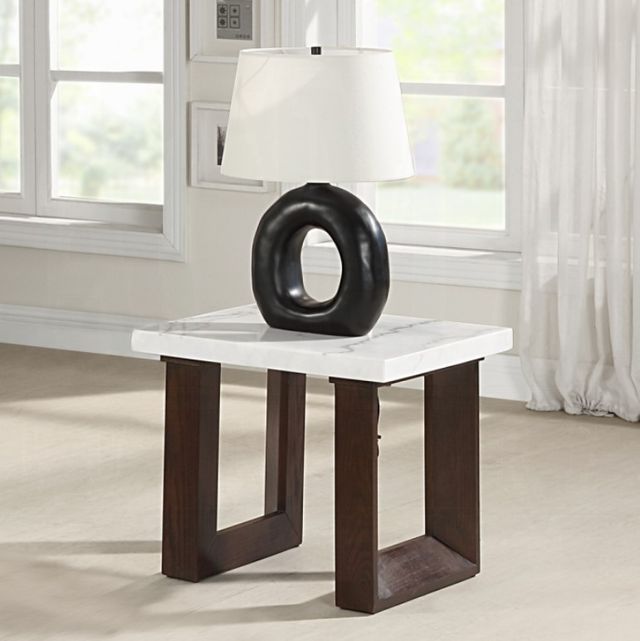
Style names are shortcuts, and knowing the visual cues makes online shopping far faster. Each of these partners naturally with certain sofas and palettes.
- Mid-century modern: tapered legs, walnut or teak tone, clean geometry. Partners with low-profile sofas, tufted or track-arm frames, and warm neutral palettes.
- Modern farmhouse: whitewashed or distressed plank tops, turned or X-brace legs. Partners with roll-arm and slipcovered sofas in cream, greige and soft blue rooms.
- Industrial: blackened metal frames, reclaimed or barnwood tops, exposed hardware. Partners with leather sofas and gray or rust palettes.
- Traditional: carved detail, cabriole legs, cherry or mahogany tone. Partners with camelback and English roll-arm sofas in deep, saturated rooms.
- Transitional: the blended middle, with clean lines and softer finishes. Partners with almost anything, which is why it sells so well.
- Coastal: rattan, cane, light oak and woven texture. Partners with white and sand rooms and slipcovered seating.
- Glam: mirrored, brass, marble or acrylic elements. Partners with velvet sofas, jewel tones and high-contrast black and white rooms.
- Minimalist and Scandinavian: pale wood, pared-back silhouettes, no visible hardware. Partners with light, low-clutter rooms and simple upholstery.
Mixing styles works when one element carries across. Repeat a finish tone, a leg shape or a metal color, and two different tables will read as a deliberate choice instead of leftovers.
Do Your Tables Have to Match?
No, and the honest answer depends on the room. A coordinated end table and coffee table set is the safer call in a formal living room, in a room where the seating is already visually busy, or when a shopper wants the decision made for them in one afternoon. Deliberately unmatched tables read as more designed in open-plan rooms, in smaller spaces where variety adds interest, and when one table needs storage and the other does not. The connector is finish tone. Two different shapes in the same warm oak look intentional; two nearly identical shapes in slightly different browns look like a mistake.
Pick a Shape and Finish That Survives Real Daily Life
Shape decides how a table behaves in traffic. Square and rectangular tables give the most usable surface and sit flush against a sofa flank. Round and oval tables have no sharp corners, which makes them the standard recommendation for tight walkways and homes with toddlers. Drum and pedestal tables take a small floor footprint while carrying real visual weight. Nesting sets pull apart when guests arrive and stack back down afterward. C-shaped tables slide over a sofa or sectional seat for laptop work.
How Materials Actually Hold Up
- Solid hardwood: the most durable and the only material on this list that can be sanded and refinished years later. Heavier and priced accordingly.
- Engineered wood with veneer: stable, affordable and available in far more finishes. A deep scratch through the veneer generally cannot be repaired.
- Metal: hard to damage, easy to wipe, and visually light when the frame is open. Powder-coated finishes can chip at the feet.
- Tempered glass: keeps a small room feeling open, but shows every fingerprint and needs weekly attention.
- Marble and faux stone: beautiful and cool to the touch. Natural marble stains from wine, citrus and oil unless it is sealed and resealed. Faux stone shrugs those off.
- Rattan and cane: light, textural and warm, best on covered indoor surfaces rather than under direct daily wear.
Kids, Pets and the Refinishing Question
Households with small children and dogs should weight three things: rounded edges or a radius corner, a sealed and wipeable finish, and a base wide enough that a table does not tip when a toddler pulls up on it. Light finishes hide dust better than dark ones, which matters more here than in most parts of the country.
The refinishing point is worth sitting with, because it reframes price. A solid wood end table that costs more today can be sanded and restained in year twelve when tastes change. A veneer table cannot. Over a fifteen-year life, that difference often erases the gap on the tag.
End Table Types Compared: Size, Storage and Best Use
| Type | Typical footprint | Height range | Storage | Best for | Main limitation |
|---|---|---|---|---|---|
| Square or rectangular | 18 to 26 in wide | 22 to 26 in | Often a drawer or shelf | Standard sofa flank | Sharp corners in tight paths |
| Round or oval | 18 to 24 in across | 22 to 26 in | Usually a shelf only | Walkways and homes with kids | Less usable flat surface |
| Drum or pedestal | 16 to 22 in across | 20 to 25 in | Rarely any | Small rooms needing presence | Can tip if the base is narrow |
| Nesting set | Two or three graduated tops | 18 to 24 in | None | Flexible entertaining | Smallest table gets misplaced |
| C-shaped table | 12 to 18 in wide | 24 to 28 in | None | Laptop and snack use | Needs clearance under the sofa |
| Storage or chairside cabinet | 20 to 28 in wide | 24 to 30 in | Drawers or a cabinet | Hiding remotes and cables | Heaviest and most visually solid |
Read the table by your room first and your style second: a small apartment is best served by a round or drum table, a family with young kids by a round table with a lower shelf, and a lamp-and-storage combination by a chairside cabinet with a drawer.
Turn a Side Table Into the Hardest-Working Surface in the Room
Storage is where an end table stops being furniture and starts being useful. The options break down cleanly. A single drawer swallows remotes, chargers and coasters. An open lower shelf holds books, a basket or a throw. A closed cabinet door hides everything, which is the right answer when the living room is visible from the entry. A lift-top surface raises to laptop height for work from the couch. A chairside table with a tray top and magazine slot fits tight against a recliner where a full-size table will not.
Built-in power deserves plain language. USB-A is the older rectangular port, USB-C is the smaller oval one, and current phones, tablets and laptops charge noticeably faster on USB-C. A table with only USB-A ports will feel dated in three years. Standard outlets built into a table are the most flexible option because any adapter works. Integrated wireless charging pads are convenient but slower, and most require you to remove a thick phone case.
Cord management is the detail nobody thinks about until the lamp arrives. Look for a cord pass-through at the back panel or an open back on cabinet-style tables, and place the table so the lamp cord runs behind the sofa rather than across the walking path.
Match the feature to the household:
- Remotes, chargers and clutter that has no home: a drawer.
- Books, baskets and a folded throw: an open shelf.
- A living room that stays visually calm: a closed cabinet.
- A work-from-couch setup: a lift-top.
- A recliner with no flat arm: a chairside table with a tray top.
Integrated charging is worth paying for when the table serves the seat where you actually work or scroll every evening, and when the nearest outlet is more than a few feet away. It is not worth paying for when the outlet is right behind the table anyway. In that case, a plain table plus an inexpensive separate charging dock costs less and can be replaced when charging standards change again.
End Tables for Living Room Spaces: Pros and Cons to Weigh
Adding end tables to a living room buys convenience, better lighting placement and a more finished room, and it costs floor space, money and visual weight. Both sides are real. Knowing them keeps you from buying a matched pair for a room that only had space for one table.
Pros
A surface within reach of every seat
Drinks, remotes and phones get a home, which is the single fastest way to stop clutter from migrating to the sofa arm and the floor.
Better lighting placement
Table lamps need somewhere to stand, and a lamp beside a seat lights a book far better than a ceiling fixture ever will.
Storage that hides the mess
A drawer or cabinet absorbs the cables, chargers, coasters and remote controls that make an otherwise tidy room look busy.
Visual balance and defined zones
A table at the end of a sofa stops the seating from floating and signals where one conversation area ends and the walkway begins.
Charging where you sit
Built-in USB-C ports and outlets keep phones charged at the seat instead of on the kitchen counter across the house.
Cons
They consume floor space you may need
In a room under about 12 feet wide, a pair of end tables can eat the walking clearance that made the room feel open in the first place.
A matched pair doubles the cost
Two tables mean two prices, and the second one is often bought for symmetry rather than for use.
Make Every End Table Look Intentional, Not Cluttered
Styling an end table follows a formula you can repeat in any room. Place one tall element, usually a lamp. Add one mid-height element, such as a small plant, a vase or a candle. Add one flat element, such as a stacked pair of books or a tray. Then stop, and leave a third of the surface empty. That negative space is what separates styled from covered.
Lamp scale has a rule worth knowing. When you sit in the adjacent seat, the bottom edge of the lampshade should land at or just below your eye level, so you see light rather than the bulb. On a 24 inch table beside a standard sofa, that usually means a lamp between 24 and 28 inches tall.
The tray trick does most of the heavy lifting. Corral remotes, coasters and a charging cable onto one small tray, and the same objects read as a deliberate grouping instead of scatter. Anything that does not live on the tray needs a drawer.
Two things should never live on an end table long term: mail piles and a nest of charging cables. Both grow, and both undo the styling within a week.
Styling a Pair So They Read as Intentional
For a formal room, go fully symmetrical, with matching tables, matching lamps and mirrored accessories. For a relaxed room, keep the tables and lamps different but repeat one color or material across both, such as brass bases on two different lamps or the same wood tone on two different shapes. Seasonal refreshes should happen on the tabletop, not on the table itself: swap a vase, a book stack or a candle color and the room feels updated without buying furniture.
What a Las Vegas Living Room Does to an End Table
Southern Nevada is hard on furniture in ways national buying guides never mention, and end tables sit right in the line of fire. Valley homes are built with big west-facing windows and sliding doors that catch hours of direct afternoon sun, and our humidity runs in the single digits for months at a time. That combination fades dark wood stains unevenly, dries out solid wood joints, and turns a glossy black lacquer top into a fingerprint and dust magnet during monsoon season when fine desert dust settles on everything indoors. Add the valley’s housing stock, which leans heavily on open great rooms and stucco-walled patios sliding straight into living space, and the tables that survive here are not always the ones that top national lists.
- Keep dark-stained wood tables out of direct west-facing window sun, or plan on rotating them a quarter turn twice a year so fading stays even.
- Favor sealed, wipeable tops in dusty months, since fine grit acts like sandpaper when you drag a mug across an unsealed surface.
- Light finishes, whitewashed oak and white marble hide our dust between cleanings far better than espresso or black.
- Solid wood pieces sitting near a slider benefit from a small room humidifier in the driest weeks, which slows joint shrinkage.
- Glass tops read cool and open in a hot-climate room, but expect to wipe them twice as often here as you would in a humid climate.
- Round tables earn their keep in valley great rooms, where seating often floats away from walls and every corner sits in a traffic path.
The Best End Tables for Living Room Style at Walker Furniture
These seven tables were picked to answer different rooms, not to rank against each other. There is a small-space pick, a storage-minded pick, a modern sculptural pick, a marble-topped pick and a warm neutral pick, so start with the sizing rules above and then choose the finish that talks to your sofa. Every one of them is available to see, touch and measure in our Las Vegas showroom before you commit.
Luxure End Table (Black)
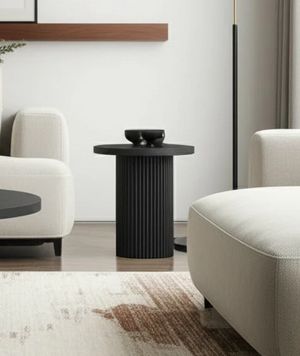
Black furniture does something no other finish can: it stops the eye and gives a light-filled room an anchor point. That is exactly the job this table takes on beside a gray, cream or camel sofa, where a soft finish would disappear. The dark tone reads as glam in a velvet-and-brass room and as modern minimal in a pared-back one, so it works across more palettes than shoppers expect. Pair it with a brass or ceramic lamp for contrast, and keep a microfiber cloth nearby, since dark surfaces show valley dust first.
Top Features
- Black finish that anchors a light room: Gives a pale sofa and light walls a point of contrast so the seating area feels grounded.
- Style flexibility: Reads glam next to velvet and brass, and modern minimal in a low-clutter room, which widens where it can live.
- Compact accent proportions: Sized to serve a seat rather than to fill a corner, which suits apartments and smaller great rooms.
- Strong lamp partner: A dark base makes brass, ceramic and white lamp bases pop instead of blending in.
Polished End Table
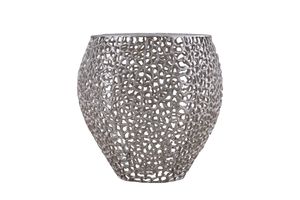
A polished surface bounces light around, which is why this table works so well in rooms that feel a little tight or a little dim. The reflective finish reads as visual lightness even though the table takes up the same footprint as a matte one, a distinction that matters when a small living room needs a surface without feeling crowded. It suits transitional and glam rooms, and it partners naturally with mirrored or metallic accessories. Give it a weekly wipe and it stays sharp, since polished tops show fingerprints faster than textured ones.
Top Features
- Reflective finish adds visual space: Bouncing light makes the corner of a small living room read more open than a matte surface would.
- Transitional and glam versatility: Sits comfortably in a blended modern room or a more decorated one with metallic accents.
- Smooth, wipeable top: Spills and dust come off with a soft cloth rather than needing a specialty cleaner.
- Pairs with metallic accessories: Brass trays, mirrored frames and chrome lamps look deliberate on a polished surface.
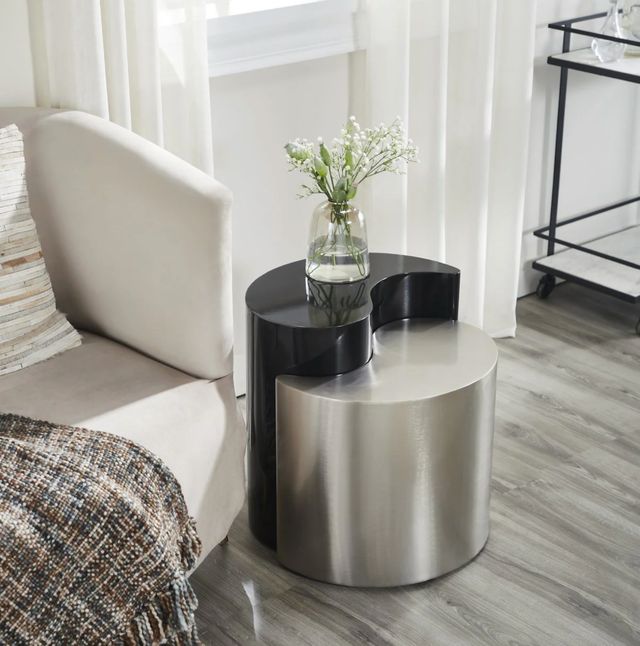
Yinyang End Table
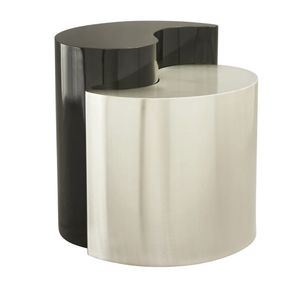
Some end tables are furniture and some are sculpture that happens to hold a drink. This is the second kind, and it belongs in a room where the sofa is simple and the walls are quiet, because a curved, contrast-driven form needs breathing space to register. The design language is contemporary, so it partners with low-profile modern seating and pale palettes rather than with carved traditional frames. Use it as a single table rather than a pair, since a sculptural shape repeated twice loses the effect that made it interesting in the first place.
Top Features
- Sculptural silhouette: A shaped, contrast-driven form gives a plain seating group a focal point without hanging anything on the wall.
- Contemporary pairing: Designed for low-profile modern sofas and quiet palettes where the shape can be seen clearly.
- Works as a solo statement: One table does more here than a matched pair, which saves both floor space and budget.
- Compact floor presence: A shaped base takes less visual room than a boxy cabinet in a tight seating arrangement.
ACME Furniture Edwyn White Marble Top End Table with Brown Base
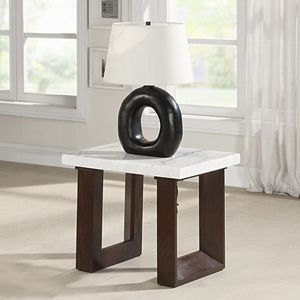
The white marble top and warm brown base give this table two jobs at once: a cool, hard-wearing surface for drinks and a wood tone that ties back to flooring and case goods elsewhere in the room. That mix is why marble-topped tables read as expensive in photographs and hold up in real living rooms. White marble also hides our valley dust between cleanings far better than a dark top does. Seal it once a year and use coasters under wine and citrus, and the surface stays bright.
Top Features
- White marble top: A cool, hard surface that resists heat marks and hides fine dust better than dark finishes.
- Warm brown base: Ties the table to wood flooring, cabinetry and other case goods so it does not read as an outlier.
- Two-tone contrast: The light top and darker base give the piece dimension, which reads as designed rather than plain.
- Care is simple: Annual sealing plus coasters under acidic drinks keeps natural stone looking new for years.
Becker End Table
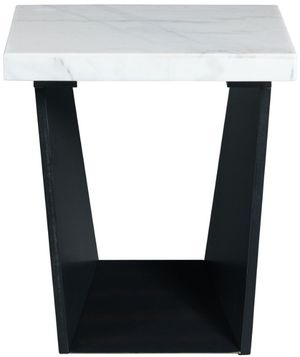
This is the everyday workhorse of the group, the table you buy when the living room needs a dependable surface beside the sofa and not a conversation piece. Clean lines mean it sits comfortably in transitional rooms, which is where most Las Vegas great rooms actually land, and a straightforward silhouette makes it an easy second table if you already own something more distinctive. Households with kids and pets do well with a table like this, since a simple form has fewer edges and corners to catch a hip or a leash.
Top Features
- Transitional styling: A clean, uncomplicated shape that partners with the majority of sofas rather than demanding a specific look.
- Everyday durability focus: Built as a surface you use nightly, not one you protect from use.
- Easy to pair: Simple lines make it a comfortable partner to a more sculptural table on the opposite end of the sofa.
- Family-friendly form: Fewer decorative projections mean fewer places to catch a hip, a toy or a leash.
Bouge Brown End Table
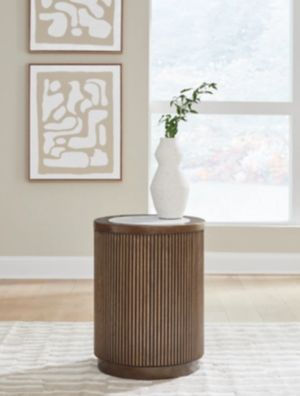
Warm brown is the most forgiving finish in a living room, and that is the argument for this table. It bridges mid-century, transitional and rustic rooms because the tone carries across all three, so it keeps working if you replace the sofa in five years. Brown also handles a west-facing valley window better than a black or espresso finish, which fades more visibly under strong afternoon sun. If you are buying two tables and want them to survive a future redecoration, this is the safe half of the pair.
Top Features
- Warm brown tone: The most flexible finish family in a living room, comfortable across mid-century, transitional and rustic rooms.
- Sun-tolerant color: Mid-brown tones show less visible fading in a bright, west-facing Las Vegas room than black or espresso.
- Long-term flexibility: Keeps working when the sofa or rug changes, which protects the purchase across redecorations.
- Easy pairing partner: Works alongside a bolder table on the opposite end of a sofa without competing with it.
Camdill White End Table with Light Brown Base
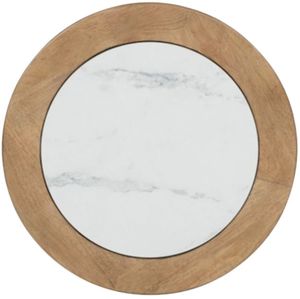
A white top over a light brown base is the coastal and modern farmhouse answer, and it is the brightest table in this group. Light finishes have a practical advantage in Southern Nevada that shoppers discover a month after delivery: they hide dust far better than dark ones, so the surface looks clean longer between wipe-downs. The pale top also keeps a small living room feeling open, since the table reads lighter than its actual footprint. Pair it with a natural fiber lamp base or a ceramic one for a relaxed, put-together seating area.
Top Features
- White top with light brown base: A two-tone combination that suits coastal, farmhouse and Scandinavian-leaning rooms.
- Hides dust between cleanings: Pale surfaces show far less fine grit than dark ones, which matters in a desert climate.
- Keeps small rooms open: A light finish reads visually smaller than its footprint, so the seating area feels less crowded.
- Natural material pairing: Rattan, ceramic and linen lamp shades look at home on a light two-tone table.
Size to the sofa arm first, choose a style that talks to your seating rather than copying it, and let storage and charging needs settle the final pick. Do those three things in that order and the table you bring home will still be right in year ten.
Come see them in person. Shop end tables online at Walker Furniture or visit our Las Vegas showroom, where our design consultants will measure alongside you, pull drawers open so you can feel the glide quality, and show you how a finish actually looks under real light instead of under a product photographer’s lamps. Our own crews handle delivery and setup, and our service team is right here in the valley years after the sale. That is what buying from a family-owned Nevada retailer gets you instead of a box on the doorstep and a chat window.
Read more:
7 Small Sofas for Small Spaces That Still Feel Comfortable
Tips for Choosing the Right Color Accent Chair
Frequently Asked Questions about End Tables for Living Room Spaces
An end table should stand within about two inches of your sofa arm height, level or slightly below, which puts most tables in the 22 to 30 inch range. Measure from the floor to the top of the sofa arm before you shop, and if the sofa is armless or very low profile, use the seat cushion height plus two to four inches as your target instead.
In a small living room, look for a table roughly 16 to 20 inches wide and deep, with a round or drum shape so there are no corners in the walking path. Keeping the table no deeper than the sofa preserves the 30 to 36 inches of clearance a small room needs to still feel open.
End tables do not have to match the coffee table, and in open-plan rooms an unmatched mix often looks more designed than a full set. The connector that keeps mixed tables from looking accidental is a shared finish tone, leg shape or metal color rather than an identical silhouette.
Both sides only need a table when both ends of the sofa are open to the room and both seats get used for reading or drinks. A single end table is the better call when one end meets a wall or a walkway, when the room is under about 12 feet wide, or when a floor lamp already serves that end.
An end table is a working surface sized to the arm of a sofa or chair and placed at the end of a seating run, while a side table is a broader category that includes smaller and more decorative pieces placed anywhere along a wall. Retailers use the terms interchangeably, so shop by height and depth rather than by the label on the tag.
Solid hardwood with a sealed finish and a wide, stable base is the most durable choice for homes with kids and pets, since it resists dents, wipes clean and can be refinished years later. Round or radius-cornered shapes add a second layer of practicality, because there are no sharp corners at toddler head height.
Why Trust Walker Furniture & Mattress?
The trust behind Walker Furniture & Mattress is built on a century-long legacy of craftsmanship and family values. It began in the early 1900s with Isadore Alterwitz’s mattress business in Chicago and evolved into a Nevada institution when the Alterwitz family purchased Walker Furniture in 1973. Today, as a locally owned and family-operated business, the Alterwitz family continues to serve the Las Vegas Valley with four convenient locations, offering a personal touch that national chains simply can't match.
Shopping at Walker means more than just buying furniture; it’s about investing in quality backed by a history of community dedication. Customers rely on their expertise for everything from flexible financing options, including long-term no-interest plans. With professional services like delivery tracking and comprehensive furniture protection, Walker Furniture & Mattress remains the region's most reliable choice for creating a beautiful, comfortable home.